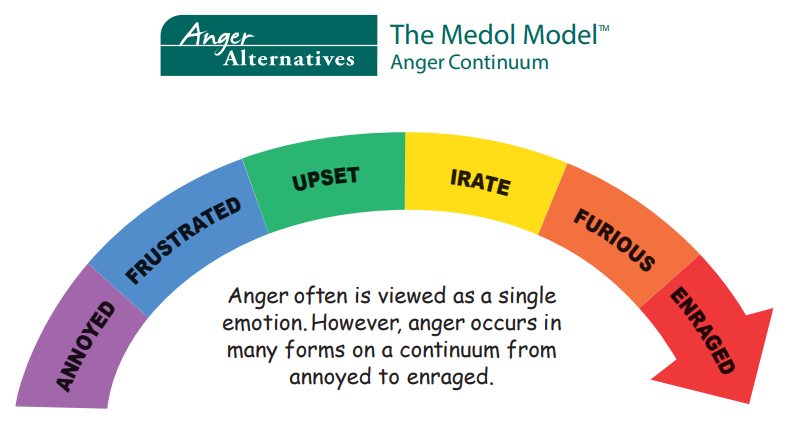
Forms of Anger Attitudes

  • Feelings and experiences develop attitudes.
  • Anger is expressed in attitude.
  • Anger feelings occur when something you don’t want is happening or something you want isn’t happening.
  • How you “feel”, is about you and never about anything anybody is “making” you feel.
  • The feelings you are having are you, having your feelings and experiences.
  • Nobody can “make you feel” anything. If you blame someone for how you feel you am wrong.

Presented here is Anger Alternatives understanding and belief of the various forms of anger attitudes.

Addictive - “I need.” Needing to have something. Addictions can be to alcohol, drugs, Rx, work, love, sex, food, pornography etc.. Anything that is a patterned and compulsive behavior might be an addiction. Most, if not all, addictions and a great deal of substance abuse are behaviors intended to medicate anger. Whatever the substance, if it is used is to escape, it is anger related. Patterns of addictions are usually learned. If the addiction creates an altered state, that addiction likely needs to be addressed before the anger can be managed accountably.

Aggressive - “You do.” An aggressive person is one who tells others by making “you” statements and telling others about themselves. An aggressive person wants to control, and believes there is no other way. An aggressive person usually approaches issues and needs by making unilateral decisions or giving orders to others. Aggressive is a fear of not being in control, distrust of others and a need to exert control.

Depressive - “I can’t.” Situational depression is often about feeling powerless. Anger and shame emotions are set loose blaming one’s self for not being able to manage something the way one expects he or she should. Situational depression is often learned, expressing powerlessness, shame and anger. (Managing anger can also be a powerful ally to a chemically depressed person.)

Passive - “I don’t want to bother you.” A passive person has learned somewhere to believe he is not entitled to “receive”. Often a passive person will feel that if he or she does receive, somebody else might have to do without. Often a passive person has been taught that if he or she asks, it will draw attention that might be embarrassing, hurtful or shaming. Risking is hard for passives.

Passive-Aggressive – A Passive-Aggressive person handles issues and deals with needs and wants by “coming in the back door”. A Passive-Aggressive person might ask for something that is different from the “real” want. He or she directs the interaction to accomplish the real want, without it ever being named. Usually this person learned somewhere that being direct is risky and doesn’t work.

By intention or by conditioning all of the above attitudes can be manipulative.

Shame - The message that there is something wrong with a person or a thing. It is an opinion based on expectations that is projected on others or internalized by oneself. It is an attitude that controls through disrespect, discounting and judgment. It is important to distinguish shame from guilt. Guilt is a legitimate feeling based on a values system, that comes from feeling bad about having done something wrong.

Shame, by intention or conditioning, is a manipulative feeling or behavior.